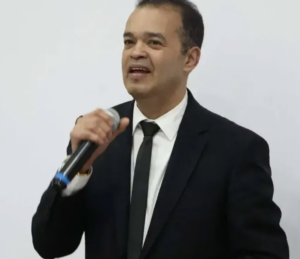
Alex Bueno Obituary-The world of Latin music is completely shattered today. If you have ever danced to the infectious, lightning-fast rhythm of merengue or felt the deep, emotional pull of a classic bachata track playing late into the night, chances are you have been moved by the legendary voice of Alejandro Wigberto Bueno López. Known to millions around the globe simply as Alex Bueno, the Dominican music icon has sadly passed away. The breaking news surrounding the Alex Bueno obituary and his tragic death after a grueling, highly private battle with brain cancer has sent massive shockwaves through the global entertainment industry. He was a monumental figure in Latin culture, a man whose incredibly pure voice earned him the affectionate title of “El Gorrión de la Sierra” (The Sparrow of the Mountain). He was 62 years old.
As the devastating news of his passing on Thursday, June 18, 2026, circulates across social media, television broadcasts, and radio waves, fans, fellow musicians, and cultural critics are pausing to reflect on a monumental career that spanned over four distinct decades. You simply cannot talk about the golden era of Dominican music without dedicating a massive, central chapter to Alex Bueno. He didn’t just sing songs; he lived them. He was the undisputed soundtrack to countless family gatherings, romantic nights, heartbreaks, and massive stadium concerts. His life was a rich, complicated tapestry of incredible artistic highs, devastating personal lows, and ultimate redemption. From his humble, rural beginnings in the lush, green mountains of San José de las Matas to the flashing lights of New York City, where he ultimately drew his last breath surrounded by his family, his journey is a stunning testament to the power of human resilience and raw artistic genius. Today, we are diving deep into his incredible legacy, his profound cultural impact, the legal complexities of his vast musical estate, and the beautiful music he leaves behind for future generations.
The Day the Music Stopped: The Tragic Passing of Alex Bueno
Thursday morning brought the kind of news that makes an entire nation stop what it’s doing. At precisely 9:43 a.m. in a specialized intensive care unit in New York City, Alex Bueno passed away. His family confirmed the heartbreaking reality through a deeply emotional post on his official Instagram account, a digital space that had recently become a beacon of hope and prayer for his hundreds of thousands of followers. For the past eight months, Bueno had been engaged in the fight of his life against a highly aggressive form of brain cancer. It is incredibly difficult to reconcile the image of the vibrant, energetic performer who commanded massive stages with the harsh, unforgiving realities of a terminal illness. But even in his final days, reports from those closest to him indicated that he maintained his signature warmth, his deep faith, and his profound love for his family and his fans.
The news of his death immediately dominated the headlines of major Dominican media outlets and quickly spread to international news syndicates. Fans in Santo Domingo, New York’s Washington Heights, Miami, and across Latin America began pouring into the streets, blasting his greatest hits from their cars and apartment windows in spontaneous, tearful tributes. It is a unique kind of collective grief when a cultural icon dies. You aren’t just mourning the loss of a man; you are mourning the loss of the memories associated with his voice. For a generation of Dominicans, Alex Bueno was the voice of their youth, their romances, and their celebrations. His passing marks the definitive end of an extraordinary chapter in Latin music history. The intensive care unit where he spent his final days became a quiet sanctuary, guarded fiercely by his loved ones who wanted to ensure that his transition was as peaceful and dignified as possible, far from the invasive glare of the paparazzi.
Early Life and the Lush Roots of a Musical Genius
To truly understand the massive cultural phenomenon that is Alex Bueno, you have to travel back to his roots. Born on September 6, 1963, Alejandro Wigberto Bueno López grew up in San José de las Matas, a picturesque municipality located in the Santiago province of the Dominican Republic. This region, nestled deep in the mountainous terrain, is known for its breathtaking landscapes and its rich, deeply ingrained musical traditions. Bueno was born into a household where music wasn’t just a hobby; it was the very lifeblood of the family’s daily existence. His parents, Santiago Bueno and Francisca López, cultivated an environment where melodies filled the air from sunrise to sunset.
His mother and grandmother were avid singers who often played the guitar, weaving traditional Dominican folk songs into the fabric of young Alejandro’s childhood. His father was a multi-instrumentalist who played both the guitar and the violin, while his brother, Felipe, also possessed a natural talent for singing. It was entirely inevitable that Alex would absorb this musical energy. By the time he was a young boy, he was already singing at local family reunions, school events, and in the choir of his local church. His voice, even then, possessed a unique, crystalline purity. It wasn’t just that he could hit the right notes; it was the profound emotional weight he carried in his vocal delivery. He had the rare ability to make you feel the joy or the pain of the lyrics, a skill that cannot be taught in any music conservatory. Recognizing that the rural mountains could not contain his massive potential, he eventually made his way to the bustling capital of Santo Domingo. The city was a chaotic, vibrant hub of culture and commerce, and it was the ultimate proving ground for any young artist looking to make a name for themselves in the highly competitive Dominican music scene.
The Unstoppable Rise of “El Gorrión de la Sierra”
The late 1970s and early 1980s were a transformative period for merengue. The genre was evolving rapidly, moving away from its rural, acoustic roots and embracing full orchestral arrangements, blaring brass sections, and highly complex, syncopated rhythms. It was an era of musical giants, and a young Alex Bueno stepped right into the middle of the arena. His big break came when he joined forces with the legendary Fernando Villalona, one of the most beloved figures in Dominican music history. Working alongside Villalona provided Bueno with a masterclass in stage presence, vocal control, and crowd interaction. But Bueno was never destined to be a background player. He had a singular vision for his music.
In the early 1980s, alongside Andrés de Jesús, he formed Orquesta Liberación. This move was a massive gamble, but it paid off spectacularly. The group allowed Bueno the creative freedom to explore different musical avenues and refine his signature sound. The early 1990s, specifically 1991 and 1992, proved to be the golden era of his career. He released a string of massive, unforgettable hit songs including “Jardín Prohibido,” “Querida,” and “Esa Pared.” These tracks didn’t just top the charts in the Dominican Republic; they exploded across international borders, dominating radio play in Puerto Rico, Colombia, Venezuela, and the massive Latin diaspora in the United States. “Jardín Prohibido,” in particular, remains a masterclass in vocal delivery. The song’s lush arrangement, combined with Bueno’s soaring, flawless tenor, solidified his reputation as one of the most technically gifted singers in the history of the genre. Critics praised him, fans adored him, and his nickname, “El Gorrión de la Sierra,” became synonymous with musical excellence. He possessed an uncanny ability to transition smoothly from high-energy, tempo-driven dance tracks to deeply romantic, slow-burning ballads without missing a beat.
Breaking Boundaries: How Alex Bueno Elevated Bachata to the World Stage
If Alex Bueno had only ever sung merengue, his legendary status would still be perfectly secure. But true artists never allow themselves to be boxed into a single category. In 1998, Bueno made a bold, highly controversial career move that would forever alter the landscape of Latin music: he released the album “Bachata a su Tiempo.” To understand the gravity of this move, you have to understand the historical stigma surrounding bachata in the Dominican Republic. For decades, bachata was dismissed by the upper classes as “música de amargue” (music of bitterness). It was considered the music of the rural poor, heavily associated with bars, brothels, and heartbreak. Mainstream radio stations outright refused to play it.
When Alex Bueno, a polished, highly respected merengue superstar with a pristine vocal reputation, decided to record a full bachata album, it sent shockwaves through the industry. He brought high-end production values, sophisticated orchestral arrangements, and his impeccable vocal technique to a genre that was previously rough around the edges. The result was nothing short of revolutionary. The album was a massive, unprecedented commercial success. Hits like “Busca un Confidente” and “Que Vuelva” became instant classics. He essentially legitimized the genre for an entirely new demographic of listeners. By bridging the gap between traditional bachata rhythms and commercial pop sensibilities, Bueno paved the exact road that future global superstars like Romeo Santos and Prince Royce would eventually walk down. He proved that bachata was not just regional bar music; it was a deeply complex, incredibly romantic genre capable of moving millions of people worldwide. The international explosion of bachata in the early 2000s owes a massive, unpayable debt to the pioneering courage of Alex Bueno.
The Grueling Cancer Battle: Diagnosis, Treatment, and Unwavering Courage
Behind the bright lights of the stage, life can deal incredibly cruel hands. The narrative of the Alex Bueno obituary is tragically anchored by his final, brutal battle with brain cancer. In September 2025, Bueno began experiencing severe headaches and neurological symptoms that forced him to seek immediate medical attention. The diagnosis was devastating: a highly aggressive brain tumor. For a man whose entire life was built on communication, memory, and rhythm, a disease affecting the brain is a uniquely terrifying prospect. Brain cancer, particularly aggressive forms like glioblastoma, requires immediate, highly invasive intervention.
In October 2025, Bueno underwent a major craniotomy to surgically remove as much of the cancerous mass as possible. Shortly after the surgery, demonstrating immense courage and a deep desire to connect with his fans, he posted an emotional video on YouTube. Auto-dubbed in multiple languages and viewed by millions, the video broke his long silence. Sitting in recovery, his head bandaged but his spirit unbroken, he confirmed the rumors of his cancer diagnosis to the world. The treatment protocol that followed was exhausting. He endured relentless rounds of targeted radiation therapy and aggressive chemotherapy. The physical toll on his body was immense. He lost his signature hair, his weight fluctuated drastically, and the immense fatigue kept him away from the recording studio and the stage he loved so deeply. Yet, throughout this agonizing eight-month period, those close to him spoke of his incredible mental fortitude. He leaned heavily on his faith and the unwavering support of his wife, Sarah Arias, whom he married in 2013. He fought the disease with the same fierce passion he brought to his music, but the cancer ultimately proved too aggressive, leading to his peaceful passing in a New York ICU.
Personal Demons and Triumphs: The Brutal Reality of Overcoming Addiction
To paint a picture of Alex Bueno as a flawless, untroubled saint would be a disservice to the incredibly complex, profoundly human reality of his life. His journey was marred by a decades-long, deeply publicized battle with severe substance abuse. His exposure to the dark side of the entertainment industry began at an alarmingly young age. He was exposed to alcohol at just 13 years old. By 16, he was smoking marijuana, and by the tender age of 17, as his career was just beginning to take off, he was introduced to cocaine. The sudden influx of massive wealth, intense public adoration, and the grueling, high-stress lifestyle of constant touring created a perfect storm for addiction.
For years, his substance abuse was the dark shadow looming over his brilliant career. There were missed concerts, erratic public behavior, and periods where the music industry genuinely feared they were watching a slow-motion tragedy. The psychological grip of cocaine and severe alcoholism threatened to destroy everything he had built. But this is where the true strength of Alex Bueno’s character was revealed. He didn’t succumb to the tragedy. He fought back. Through extensive rehabilitation programs, a total lifestyle overhaul, and a profound spiritual awakening, Bueno managed to get clean. He spoke openly and honestly about his struggles, stripping away the glamorous facade of celebrity to reveal the ugly, destructive nature of addiction. His eventual triumph over his personal demons served as a massive inspiration to countless fans who were fighting their own silent battles. He proved that no matter how deep the hole, recovery is always possible. His return to the stage as a sober, clear-minded artist was one of the greatest comeback stories in the history of Latin music.
Deep-Dive: The Legal Philosophy and Estate Management of a Music Icon
When a monumental, globally recognized figure like Alex Bueno passes away, the public conversation naturally centers on grief, memories, and tributes. However, behind the curtain of public mourning, a highly complex, incredibly rigorous legal machine must snap into action. The legal philosophy surrounding the estate management of a deceased musical icon is an intricate labyrinth of copyright law, intellectual property protection, and posthumous image rights.
Protecting the Catalog: Posthumous Rights in the Digital Age For an artist with a catalog spanning four decades, encompassing merengue, bachata, salsa, and bolero, the financial assets left behind are staggering, even if they aren’t entirely liquid. In the modern music industry, revenue is primarily generated through fractional digital streams. Every single time someone plays “Jardín Prohibido” on Spotify in Madrid, or uses a snippet of “Que Vuelva” in a TikTok video in Mexico City, a complex web of performance royalties, mechanical royalties, and synchronization rights is triggered. Copyright laws generally protect a creator’s work for 70 years after their death. Therefore, the executors of Bueno’s estate face the monumental task of organizing, auditing, and legally protecting this vast intellectual property portfolio. They must ensure that his digital royalties are accurately tracked by performing rights organizations (PROs) and that his likeness isn’t exploited by unauthorized third-party merchandise vendors or unethical advertisers.
Contrasting Legal Legacies: Preserving Art vs. Punitive Liquidations To truly understand the protective legal philosophy of a celebrity music trust, we must contrast it with the darker side of legal asset management. We have all seen how legal battles can completely dismantle a person’s empire. Consider the highly publicized, catastrophic legal downfalls of prominent public figures. Notable cases, such as the massive civil judgments and forced corporate liquidations surrounding the disgraced film producer Harvey Weinstein, or the staggering defamation lawsuits that led directly to the brutal financial ruin and bankruptcy proceedings of former politician Rudy Giuliani, serve as prime examples of punitive legal philosophy. In those specific cases, the legal system is utilized as a weapon to forcefully dismantle wealth, liquidate assets, and distribute funds to victims of misconduct. The legal structure exists to destroy the empire.
In stark contrast, the legal philosophy governing the estate of a beloved cultural icon like Alex Bueno is fiercely protective and entirely preservative. Instead of courts tearing down an empire to satisfy legal judgments, Bueno’s legal team, his family trust, and his estate executors must work proactively to build legal walls around his legacy. They are tasked with preserving the cultural and financial value of his life’s work. This involves executing precise estate planning, managing trusts for his heirs, and carefully navigating licensing deals for future use of his music in films, commercials, or documentaries. The goal is to ensure that the wealth generated by his pure artistic talent is protected from external predators and distributed smoothly to his rightful descendants, preserving his pristine legacy for decades to come.
Media Presence, Cultural Impact, and the Upcoming Netflix Documentary
Even before his tragic passing, the sheer magnitude of Alex Bueno’s cultural impact had been widely recognized by major media conglomerates. The way we consume music has completely evolved from the physical vinyl records and cassette tapes of Bueno’s early career, to CDs, MP3s, and now algorithm-driven streaming platforms. Through all these massive technological shifts, Bueno’s music remained relevant. He successfully transitioned his fan base into the digital era, boasting millions of monthly listeners on platforms like YouTube Music and Apple Music.
Recognizing this enduring, cross-generational appeal, it was recently announced that Bueno’s extraordinary life story was being adapted into a premium, feature-length documentary in collaboration with the streaming giant Netflix. The documentary, which was heavily in production prior to his death, is expected to feature rare archival footage, intimate backstage moments, and in-depth interviews with industry legends. It will chronicle his rapid rise from the rural mountains, the explosive merengue boom of the 90s, his pivotal role in mainstreaming bachata, and his deeply inspiring battle with addiction. Now, in the wake of his passing, the documentary will inevitably take on a much heavier, deeply emotional tone, serving as the definitive historical record of his life. Furthermore, Bueno’s career was decorated with prestigious accolades, including multiple Soberano al Merito awards, Premio Lo Nuestro honors, and highly coveted Latin Grammy nominations, cementing his permanent status in the upper echelon of Latin music royalty.
An Outpouring of Grief: Tributes from the Global Latin Community
The measure of a man’s life can often be seen in the reaction to his death. Within minutes of the family’s official announcement, the internet was flooded with an unprecedented outpouring of grief and beautiful tributes from every corner of the global Latin community. The biggest names in the industry took to social media to express their profound sorrow.
Romeo Santos, the “King of Bachata,” who has frequently cited Bueno as a massive influence on his own vocal styling, posted a touching tribute honoring Bueno’s courage in breaking down the barriers for bachata artists worldwide. Juan Luis Guerra, another towering pillar of Dominican music, released a statement praising Bueno’s pitch-perfect voice and his immense contribution to the cultural heritage of the island. Longtime friends and collaborators, such as Antony Santos and Fernando Villalona, shared deeply personal anecdotes of their time sharing stages and recording studios. A particularly heartbreaking video surfaced of merengue star Eddy Herrera visibly crying as he recalled his decades-long friendship with Bueno. Beyond the massive celebrities, the most touching tributes came from the everyday fans. Thousands of comments flooded YouTube and Instagram, with people sharing stories of how Bueno’s music played at their parents’ weddings, helped them through bitter breakups, or simply provided the soundtrack to their happiest childhood memories.
The Immortal Legacy of Alejandro Wigberto Bueno López
As the sun sets on the life of Alejandro Wigberto Bueno López, the world is left with a profound sense of loss, but also an overwhelming sense of gratitude. Cancer may have claimed his physical body, but it absolutely cannot touch his legacy. He leaves behind a staggering discography that will continue to fill dance floors and mend broken hearts for generations to come.
Alex Bueno was a man of the people. He sang with a level of emotional honesty that is incredibly rare in today’s highly manufactured music industry. He experienced the highest peaks of fame and the lowest valleys of personal despair, and he channeled every ounce of that human experience into his microphone. He took the folk sounds of his beloved Dominican Republic and broadcast them to the entire world, refusing to be limited by genre or societal expectations. As his family and fans navigate this difficult period of mourning, they can find profound comfort in the fact that his voice is truly immortal. Long after the news cycles move on, whenever a DJ drops the needle on “Jardín Prohibido,” or whenever the smooth, romantic guitar intro of “Que Vuelva” begins to play, the spirit of “El Gorrión de la Sierra” will be right there in the room, making the world sing along with him once again.
Frequently Asked Questions About Alex Bueno
What kind of cancer did Alex Bueno have? Alex Bueno was diagnosed with a highly aggressive form of brain cancer in September 2025. This devastating diagnosis led to an immediate surgical procedure to remove a brain tumor, followed by months of rigorous chemotherapy and radiation treatments.
How old was Alex Bueno when he died? Alex Bueno passed away on Thursday, June 18, 2026. He was 62 years old at the time of his death.
What is Alex Bueno’s real name? While the world knew him simply as Alex Bueno, his full legal birth name was Alejandro Wigberto Bueno López.
Where was Alex Bueno born? He was born in the lush, mountainous region of San José de las Matas, which is located in the Santiago province of the Dominican Republic.
Who is Alex Bueno’s wife? Alex Bueno was married to Sarah Arias. The couple tied the knot in 2013, and she was known to be a massive pillar of support throughout both his addiction recovery journey and his brutal battle with brain cancer.
When is the Alex Bueno Netflix documentary coming out? Prior to his death, it was confirmed that a documentary chronicling his life, his musical impact, and his personal struggles was in production in collaboration with Netflix. An official release date has not yet been announced, but it is expected to be released posthumously as a definitive tribute to his monumental career.